
Rule 6 Safe Speed: What It Really Means for Every Watch
Safe speed isn't just a fog rule. Rule 6 applies in all conditions - here's what the factors list actually requires, and why it matters.
5 October 2026 · 8 min read · IRPCS crew
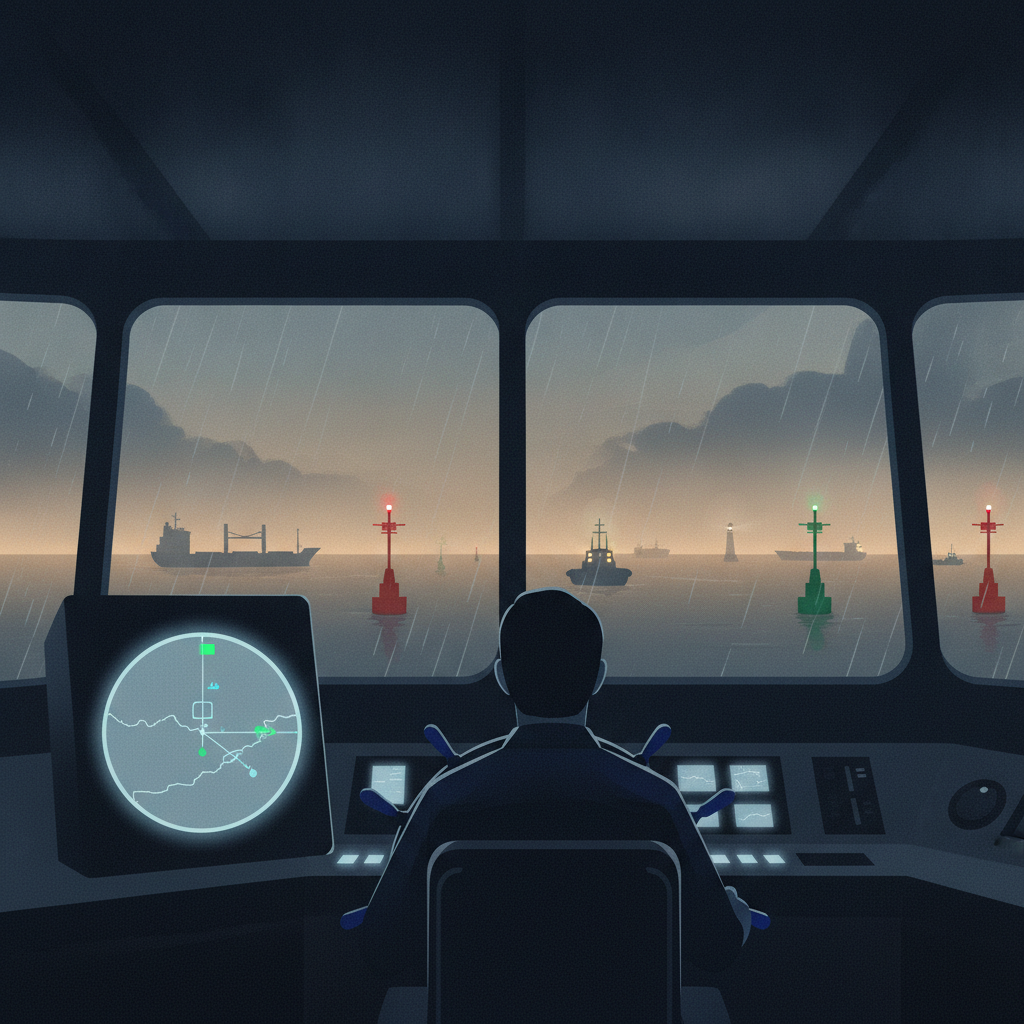
Ask a candidate what Rule 6 covers and most will say 'safe speed in restricted visibility'. That answer earns a partial mark at best. Rule 6 applies at all times, in all conditions, day or night, clear horizon or thick fog. The moment your vessel is underway, safe speed is in play. Getting comfortable with its full scope is one of the most practical things you can do for your seamanship - and for your exam result.
The core idea behind Rule 6 is straightforward: you must be able to take proper and effective action to avoid collision and, where relevant, stop within a distance appropriate to the prevailing circumstances. But the rule earns its depth from the list of factors that determine what 'safe' actually looks like on any given day. That list is longer than most people memorise, and it contains some genuine surprises.
The Factors That Apply to Every Vessel
Rule 6 sets out considerations that apply regardless of whether your vessel carries radar. These are the foundational factors, and examiners reach for them repeatedly.
Visibility is the obvious one. The worse the visibility, the lower the speed needed to keep stopping distance within what you can actually see. But visibility is not binary - a thin haze at dusk, a rain squall in an otherwise clear afternoon, or spray over the bow all reduce your effective range without triggering a formal 'restricted visibility' situation under Rule 3(l).
Traffic density matters because a crowded anchorage, a busy TSS, or a narrow channel approach gives you less time and space to react to a developing close-quarters situation. High traffic density is a reason to reduce speed even when visibility is good.
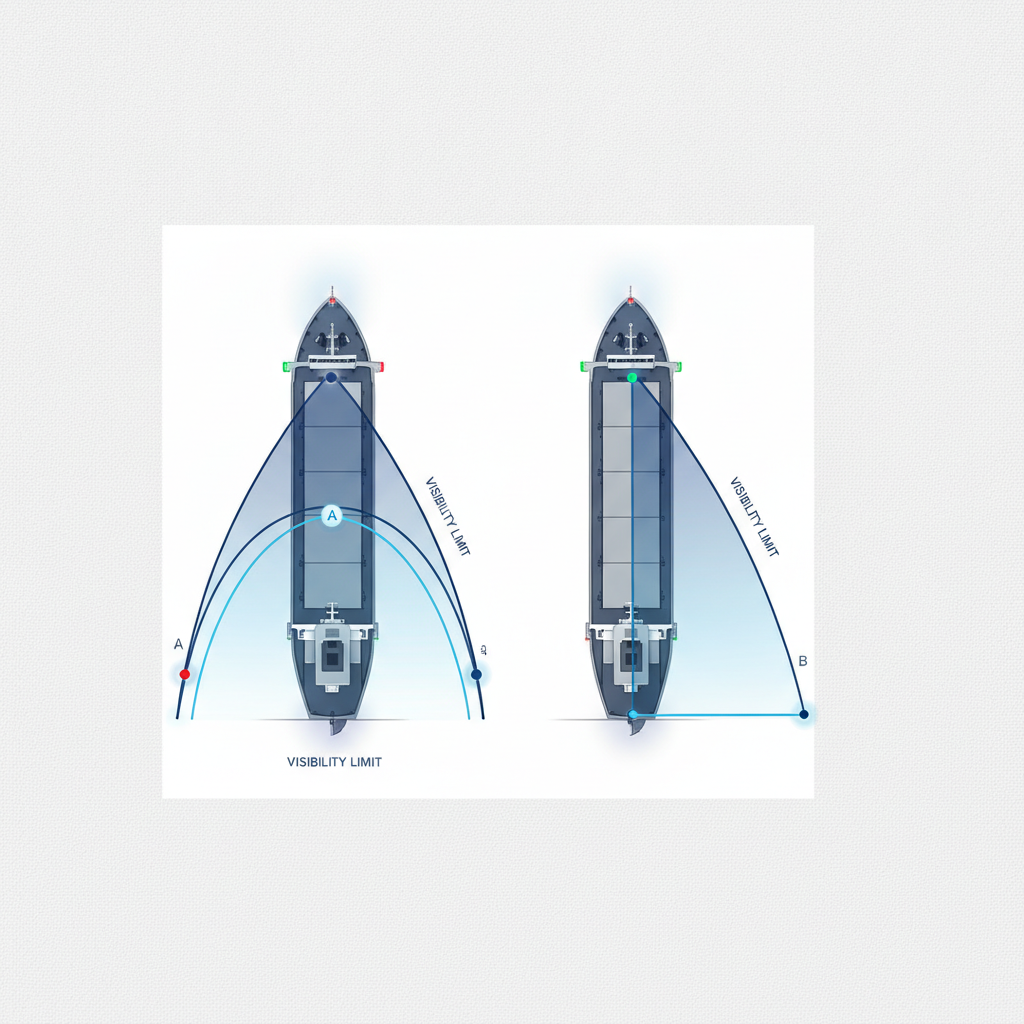
The manoeuvrability of your vessel - including stopping distance and turning ability - is explicitly included. A laden bulk carrier doing 12 knots may require more than a nautical mile to stop. A light RIB at 12 knots can stop in seconds. Same speed, entirely different risk profiles. Knowing your own vessel's stopping distance in various load and sea conditions is not optional knowledge; it is baked into Rule 6 compliance.
The state of wind, sea, and current, plus the proximity of navigational hazards, round out the environmental picture. A strong following current adds to your speed over the ground regardless of what the throttle says. A rocky shoal to leeward closes the margin for error on any manoeuvre.
The draught in relation to available depth of water closes the list for vessels without radar. A vessel working close to her draught limits has reduced manoeuvrability and, in shallow water, experiences squat - both of which extend effective stopping distance. This factor stands entirely on its own merits and is unrelated to whether radar is fitted.
If you want to test yourself on how these factors interact in scenario questions, the practice quiz at /#quiz has a solid bank of Rule 6 questions covering exactly these combinations.
The Additional Factors for Radar-Equipped Vessels
Here is where many candidates lose marks: Rule 6 includes a separate set of factors that apply specifically to vessels using radar. These are not alternatives to the general factors - they are additions.
The characteristics, efficiency, and limitations of the radar equipment in use come first. This is an acknowledgement that radar is not infallible. A set running on a poorly chosen range scale, with sea clutter improperly suppressed, or with a large blind arc from the superstructure is not providing the same situational awareness as a well-tuned installation. Rule 7 requires radar to be used properly; Rule 6 requires that its limitations inform your speed decision.
Any constraints imposed by the radar range scale in use are directly related. A vessel steaming at 15 knots on a 3-mile range scale has very little time to respond to a target that appears at the edge of the display. Switching to a shorter range scale for close-quarters awareness while monitoring a longer range scale for early warning is part of competent radar watchkeeping - and it affects what speed is genuinely safe.
The effect of sea state, precipitation, and other sources of interference on radar detection can dramatically reduce effective range. A steep head sea can produce wave clutter that masks small targets at close range. Heavy rain attenuates signals and creates clutter rings. These conditions require reduced speed to restore the margin between what you can detect and your stopping distance.
The possibility that small vessels, ice, and other floating objects may not be detected by radar is a sobering factor. A fibreglass dinghy, a half-submerged container, a baulk of timber, or a growler may return little or no echo. Operating at speed in conditions where such hazards are plausible - coastal waters with fishing activity, post-storm debris, or known ice regions - demands a margin that pure radar confidence does not provide.
The number, location, and movement of vessels detected by radar mirrors the traffic density factor but adds the dimension of your tactical picture. Even in good visibility, a complex radar picture with multiple crossing and overtaking vessels is a reason to reduce speed and allow more time to build situational awareness.
Why Perfect Visibility Is No Excuse
The persistent misreading of Rule 6 as a fog rule probably comes from the way restricted visibility features so heavily in Part D of the COLREGS. But the rule sits in Part B - General - which means it applies universally. On a clear summer afternoon with 15 miles of visibility, you are still required to proceed at a safe speed.
In practice, perfect visibility shifts the dominant factors rather than removing them. Traffic density, your stopping distance relative to vessels ahead, the proximity of hazards in a confined channel, and your vessel's manoeuvrability all remain live considerations. A powerboat screaming through a crowded anchorage in bright sunshine is in breach of Rule 6 just as surely as a vessel refusing to slow in fog.
Stopping distance deserves particular attention here. Many skippers have a rough intuition about their vessel's stopping distance in calm water but have never run a timed trial in a loaded or different sea state condition. Rule 6 implicitly requires you to know this. If you are uncertain, the rule library at /#learn covers the relationship between Rules 6, 7, and 8 in more detail, and running your own stopwatch trials in open water is time genuinely well spent.
Putting It Together on the Watch
Safe speed is not a single number. It is a continuous judgement that weighs the factors above against your vessel's capability and the current environment. A useful watchkeeping habit is to ask the question explicitly every time conditions change - not just when visibility drops, but when traffic thickens, when you enter shallower water, or when the sea state builds.
Examiners will sometimes present a scenario and ask you to identify which factors from Rule 6 are relevant. The answer is rarely just one. In a harbour approach on a rainy night with a following current and moderate traffic, you might legitimately work through five or six factors before arriving at a speed decision. That is the level of analysis the rule expects.
For passage planning, think about choke points where multiple Rule 6 factors will stack simultaneously - harbour entrances, TSS separation zones, pilotage waters in changeable weather. Deciding your speed policy for those sections before you arrive is far better than improvising in the moment.
FAQ
Does Rule 6 give a maximum speed or a formula for calculating safe speed?
No. Rule 6 deliberately avoids prescribing a specific figure or formula. It sets out the factors to consider and requires that the resulting speed allows proper action to avoid collision and stopping within an appropriate distance. The judgement is yours, informed by those factors - which is precisely why understanding each one matters.
Is there any overlap between Rule 6 and Rule 8 (action to avoid collision)?
Yes, and it is deliberate. Rule 8 requires that any action taken to avoid collision shall be taken in ample time and be effective. If you are travelling too fast, you compress the time available to take that action and reduce its effectiveness. Safe speed under Rule 6 is, in many respects, what preserves the conditions in which Rule 8 can be properly applied.
Does a vessel at anchor need to comply with Rule 6?
An anchored vessel has no speed to regulate, so the practical obligation does not arise while she remains at anchor. The safe speed requirement applies to vessels underway - and a vessel is underway whenever she is not at anchor, made fast to the shore, or aground. It is worth noting that Rule 6 is not restricted to vessels that have way on; a vessel underway but stopped in the water is still underway, and the obligation to maintain safe speed applies as soon as she begins to move through the water. An anchored vessel remains subject to other parts of the Rules, including those governing lights, shapes, and sound signals in restricted visibility - but the speed question simply does not arise until she weighs anchor and gets underway.
How does stopping distance change the exam answer on safe speed?
Examiners often use stopping distance as the anchor for safe speed questions because it is concrete and measurable. If you know your vessel requires 800 metres to stop at full sea speed, then in visibility of 500 metres you are demonstrably not at a safe speed regardless of other factors. Framing your answer around the relationship between stopping distance and effective detection range is almost always the right approach.
Drill it until it's instinct.
The IRPCS app turns every rule on this blog into adaptive quizzes, drills, and mock exams - free to start.