
Rule 8: Make Your Avoiding Action Obvious and Early
Small, hesitant helm movements are invisible from the bridge of an approaching ship. Rule 8 demands large, early, readily apparent action - here's why it matters.
19 October 2026 · 8 min read · IRPCS crew
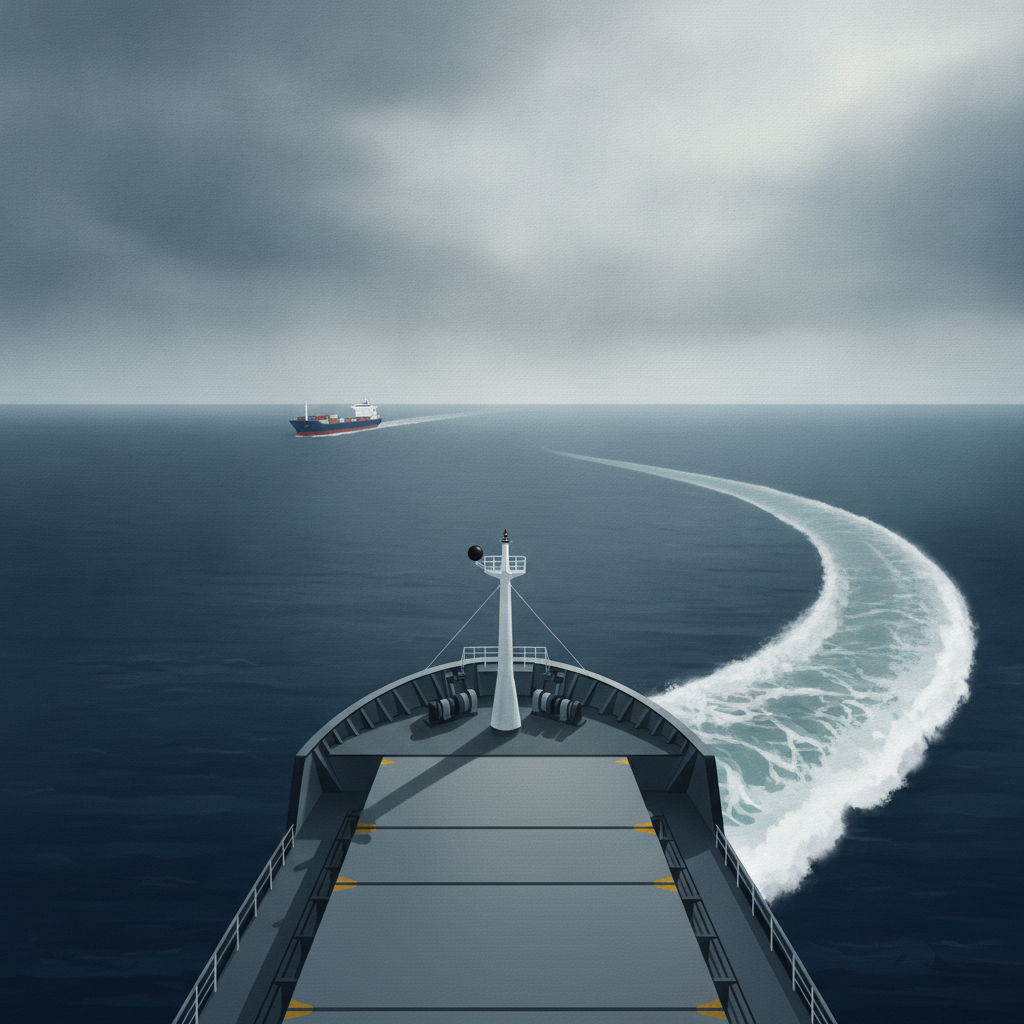
There is a particular kind of near-miss that experienced mariners recognise immediately: two vessels, each making a succession of small helm adjustments, neither quite certain what the other is doing, closing steadily on one another while both officers convince themselves the situation is under control. Rule 8 exists precisely to break that pattern before it becomes a statistic.
Rule 8 is the COLREGS' practical instruction manual for how to avoid a collision, not just whether to avoid one. Where the steering and sailing rules in Rules 12-18 tell you who must give way, Rule 8 tells every vessel - give-way or stand-on - what good avoiding action actually looks like. Getting the 'who' right but the 'how' wrong is still a failure of seamanship.
Understanding Rule 8 properly is worth your time whether you are sitting an RYA Day Skipper exam or conning a coaster through a busy separation scheme. The principles are simple, but applying them under pressure requires ingraining them until they feel instinctive.
Large and Early: Two Words That Save Ships
Rule 8 requires that any action taken to avoid a collision must be positive, made in ample time, and - critically - must result in passing at a safe distance. Tucked inside that requirement is the demand that alterations of course or speed must be large enough to be readily apparent to the other vessel, whether she is observing you visually or watching you on radar.
That phrase, readily apparent, is doing a great deal of work. Consider what the officer of the watch on an approaching vessel actually sees. At a range of several miles, your vessel is a small echo on a radar screen or a distant light. A five-degree course alteration is essentially invisible. Even a ten-degree change can fall within the noise of normal yawing and helm corrections. To be readily apparent, your alteration needs to be substantial - typically at least 30 to 45 degrees of course change in most situations, though the geometry of each encounter will vary.
The same logic applies to time. An early alteration, made while the vessels are still well separated, requires less dramatic action to achieve the same result and gives the other vessel time to observe, interpret, and respond. A late alteration needs to be sharper, faster, and carries far less margin for error. Rule 8 nudges you firmly towards acting early, precisely because early action is inherently safer action.
Why a Succession of Small Changes Is Dangerous
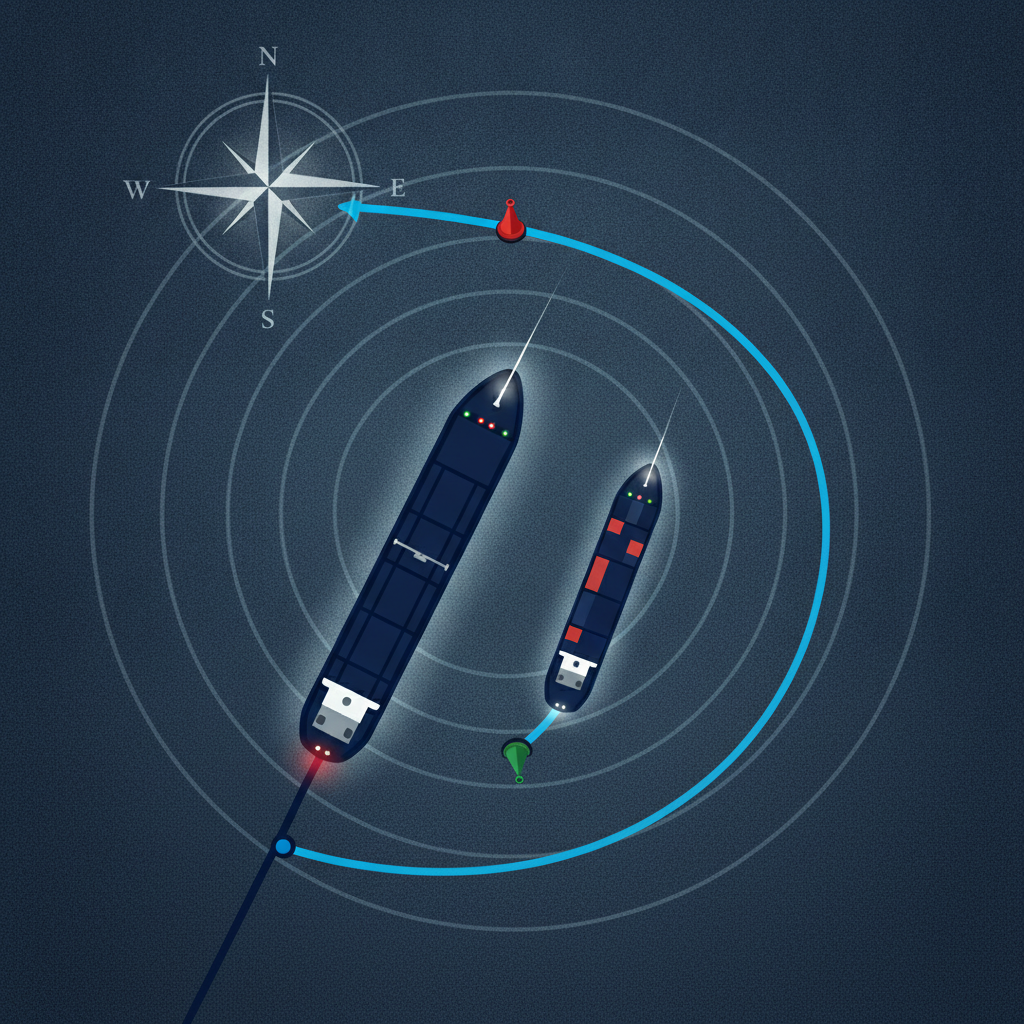
Rule 8 specifically warns against a succession of small alterations. This is not just a stylistic preference - it reflects how collisions actually happen.
When you make a series of incremental course changes, several things go wrong simultaneously. First, each individual change may be too small to register as deliberate action on the other vessel's radar or to the human eye. The observer on the approaching ship may see your heading shift a few degrees, attribute it to helming variation, and continue on the assumption that you are maintaining course. Second, each small alteration resets your geometry slightly but does not resolve the situation, meaning you find yourself making another small change a few minutes later, then another. The cumulative effect may eventually be significant, but the picture presented to the other vessel is one of confusion and indecision rather than clear intent. Third, a pattern of small adjustments often consumes time - the one resource you cannot recover.
The alternative is a single, bold, unambiguous manoeuvre. If the rules require you to give way, alter course decisively, hold that new heading, and let the other vessel see and confirm your action before you do anything else. If you are in any doubt whether your action has been large enough, it almost certainly has not been.
Speed Reductions: Visible and Verifiable
Rule 8 recognises that slowing down is sometimes the right action, but it comes with an important caveat. A speed reduction is only useful as avoiding action if it is large enough to be readily apparent - ideally verifiable on the other vessel's radar within a reasonable time. Going from 12 knots to 10 knots is rarely obvious to an observer several miles away until they have tracked you through multiple radar sweeps. Stopping engines entirely, engaging astern, or reducing to dead slow is a different matter and can be clearly seen in how your echo moves across the screen.
In many collision avoidance scenarios, an alteration of course is more immediately obvious than a speed change, which is why helm action is often the first choice. Speed reduction tends to work best as a supplement - after a clear course alteration has already communicated your intentions - or in confined situations where swinging wide is not an option.
You can test your understanding of these scenarios across a range of encounter types in the practice quizzes at /#quiz, which include radar and visual situation exercises.
Passing at a Safe Distance
Rule 8 does not merely require you to avoid a collision - it requires that your action results in passing at a safe distance. Those two things are not the same. A close-quarters situation that is technically resolved at 50 metres is not good seamanship, even if contact was avoided.
What constitutes a safe distance is not defined in the rules because it depends on the size of the vessels, their speeds, the visibility, the sea state, and the manoeuvrability of each ship. In open ocean, a large vessel might consider anything less than half a mile to be less than comfortable. In a confined channel, the numbers compress, but the principle - that your action should achieve genuine separation, not just a mathematical avoidance - remains unchanged.
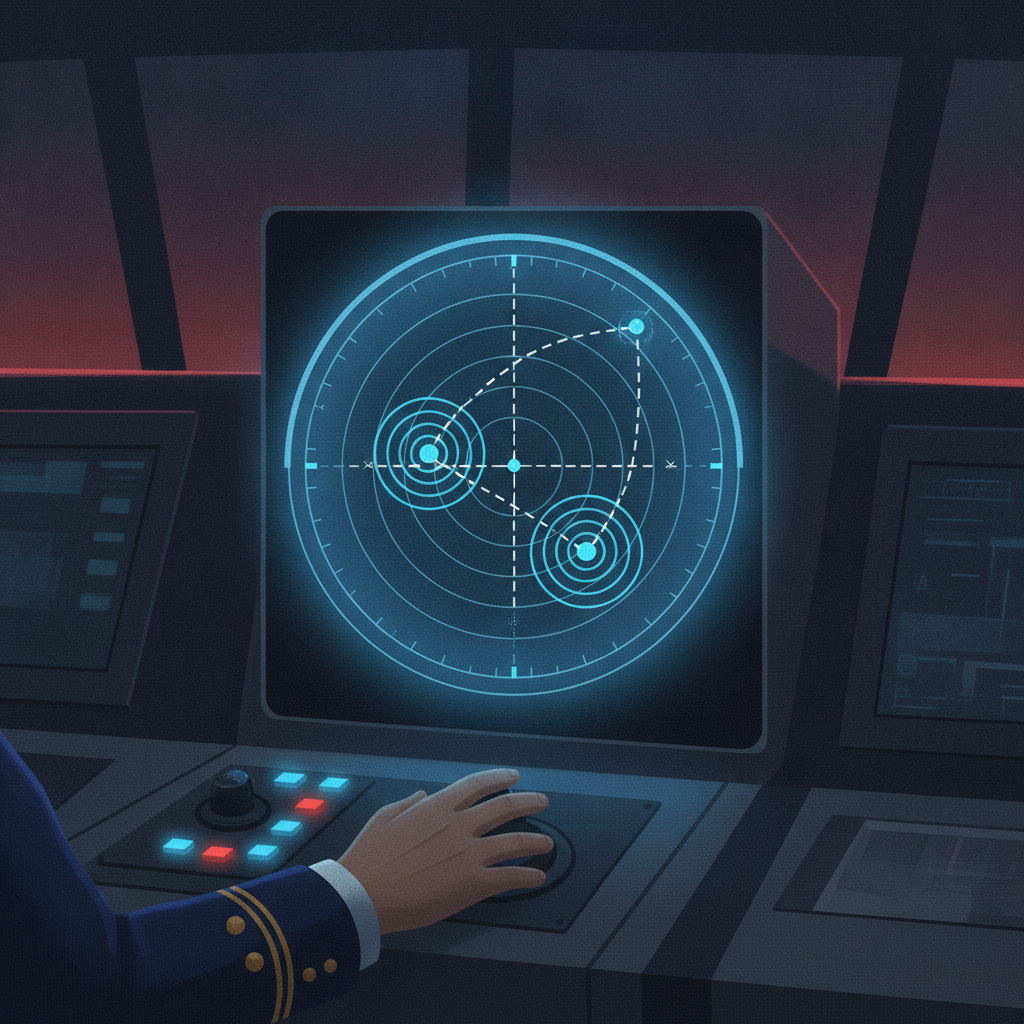
Rule 8 also allows for action to be taken using available means, which is a reminder that radar, AIS, and proper lookout (Rule 5) all feed into your ability to detect the developing situation early enough to act effectively. Good avoiding action begins with good situational awareness, long before your hand touches the wheel.
Rule 8 and the Stand-On Vessel
One subtlety worth emphasising for exam candidates: Rule 8 applies to all vessels, not only the give-way vessel. While Rules 16 and 17 set out the obligations of give-way and stand-on vessels respectively, Rule 8 establishes baseline standards for any action taken to avoid collision. If a stand-on vessel is eventually required to manoeuvre under Rule 17(b) - because collision cannot be avoided by the give-way vessel's action alone - that manoeuvre must still meet Rule 8's standards. A last-minute, tentative twitch of the helm is no more acceptable from a stand-on vessel than from a give-way vessel.
This is also worth remembering when you are the stand-on vessel and you watch the give-way vessel making small, uncertain alterations. Your obligation to maintain course and speed (Rule 17(a)(i)) does not prevent you from thinking ahead and preparing a bold emergency manoeuvre should it become necessary. Rule 8 and Rule 17 work together, not in opposition.
For a deeper look at how Rule 8 fits into the overall structure of the COLREGS, the rule library at /#learn walks through each rule in sequence with practical commentary.
FAQ
Why does Rule 8 emphasise 'readily apparent' action so strongly? Because avoiding action only works if the other vessel can see it and respond to it. A change that is invisible from the other ship - whether on radar or visually - achieves nothing in terms of collision avoidance. The purpose of your manoeuvre is not just to move your vessel but to communicate your intentions clearly enough that the other vessel can maintain or adjust its own track with confidence.
How large does a course alteration need to be to count as readily apparent? The COLREGS do not specify a minimum angle, and the right answer depends on the circumstances. As a working guide, alterations of less than about 30 degrees are frequently too small to be unambiguous, particularly at range. When in doubt, go larger. A 60-degree alteration to starboard that is clearly visible is always preferable to a 15-degree alteration that leaves the other vessel guessing.
Can I slow down instead of altering course? Yes, Rule 8 permits speed reductions as avoiding action, but they must be substantial enough to be readily apparent. Modest speed reductions are difficult to detect at distance in a reasonable timeframe and may not resolve the situation quickly enough. If you do reduce speed, make it significant and consider whether a simultaneous course alteration would make your intentions clearer.
Does Rule 8 override the specific steering rules? No - Rule 8 complements the steering and sailing rules rather than replacing them. Rule 8 sets the standard for how to take action; Rules 12-18 determine which vessel is obliged to take it. Both sets of rules apply simultaneously, and a give-way vessel that takes action must take action that meets Rule 8's requirements to be in full compliance with the regulations.
Drill it until it's instinct.
The IRPCS app turns every rule on this blog into adaptive quizzes, drills, and mock exams - free to start.